
Journal
Wolverine Statue for Collectors: 2026 Scale Guide
Wolverine statue for collectors: compare scales, resin care, pricing, and display tips. Find the best Wolverine collectible for your shelf. Start.
Table of Contents
- Why the Wolverine Statue Earns Its Spot as a Centerpiece
- Wolverine Collectible Scale Guide: 1:10, 1:4, and Quarter Scale Explained
- Materials, Sculpting Details, and Poses That Define a Great Statue
- How to Clean Resin Statues Without Damaging the Finish
- Where to Buy High-Quality Marvel Statues You Can Trust
- Price Points, Limited Editions, and Investment Potential
- Display Lighting, Maintenance, and Preservation Tips
- Conclusion: Picking the Right Wolverine Statue for Your Collection
- Frequently Asked Questions
Last Updated: September 17, 2026
Why the Wolverine Statue Earns Its Spot as a Centerpiece
A Wolverine statue for collectors works as a centerpiece because it combines a recognizable character, a dynamic pose, and a sculpted base that turns a shelf into a scene. Few characters carry the same mix of tension, musculature, and attitude in a single pose.
Wolverine, aka Logan, is the adamantium-clawed mutant from Marvel's X-Men, a gruff berserker with a healing factor. That personality translates directly into sculpture: a crouched, snarling Wolverine reads as a character study, not just a figure.
Below, we'll show you exactly how scale, material, and pose separate a forgettable shelf filler from a genuine centerpiece. The Marvel character licensing overview explains why officially sourced fanart and licensed pieces differ so much in finish quality.
Wolverine Collectible Scale Guide: 1:10, 1:4, and Quarter Scale Explained
Scale is the first decision a Wolverine collector makes: it sets the ceiling on sculpted detail and how much room a piece claims. The three dominant sizes are 1:10, 1:6, and 1:4 (quarter scale).
1:10 scale statues generally land between 7 and 10 inches tall including the base. They are the workhorse size for lineups, six to eight fit on a single 36-inch shelf, and entry pricing is low. The trade-off: fine detail like claw separation and stubble texture gets compressed. At arm's length it reads well; across the room it reads as a silhouette.
1:6 scale statues typically run 12 to 16 inches tall, the sweet spot most collectors settle into after their first year. Large enough to render musculature, gauntlet straps, and a multi-part base, but small enough that two or three share a standard bookcase shelf. If unsure where to start, 1:6 is the safest long-term choice.
1:4 scale (quarter scale) statues run roughly 18 to 24 inches tall depending on pose, and premium variants with elaborate bases can exceed 24 inches. These are display pieces first: they need vertical clearance, a surface that won't flex under weight, and dedicated lighting. A quarter scale Wolverine crouched with claws bared makes a visitor stop walking.
How Scale Affects Display and Price
Larger scales cost more for three compounding reasons: more resin or polystone by volume, more hand-painting hours across a larger surface, and more sculpting labor because detail must hold up under close inspection. A quarter scale piece also wants its own shelf at roughly eye level, so face and claws read at a natural angle.
| Scale | Typical Height | Best For | Space Needed |
|---|---|---|---|
| 1:10 scale | 7-10 in | Shelf variety, beginners, lineups | 8-10 in of shelf depth |
| 1:6 scale | 12-16 in | The all-around collector standard | 12-14 in of shelf depth |
| 1:4 scale | 18-24 in | Statement display, centerpieces | Dedicated shelf or pedestal |
| 1:4 premium | 24 in+ | Anchor pieces for a full collection | Cabinet, pedestal, or riser |
Viewing distance matters as much as height. A 1:10 statue is designed to be seen from two to three feet away, where the eye resolves smaller detail.
Materials, Sculpting Details, and Poses That Define a Great Statue
Resin and polystone are the two materials you'll see most in high-end statues, and both hold fine detail far better than cheaper plastics. Polystone is a heavy resin composite prized for weight and crisp edges; standard resin is lighter and takes sharp undercuts well, which matters for claws, gauntlets, and fabric folds.
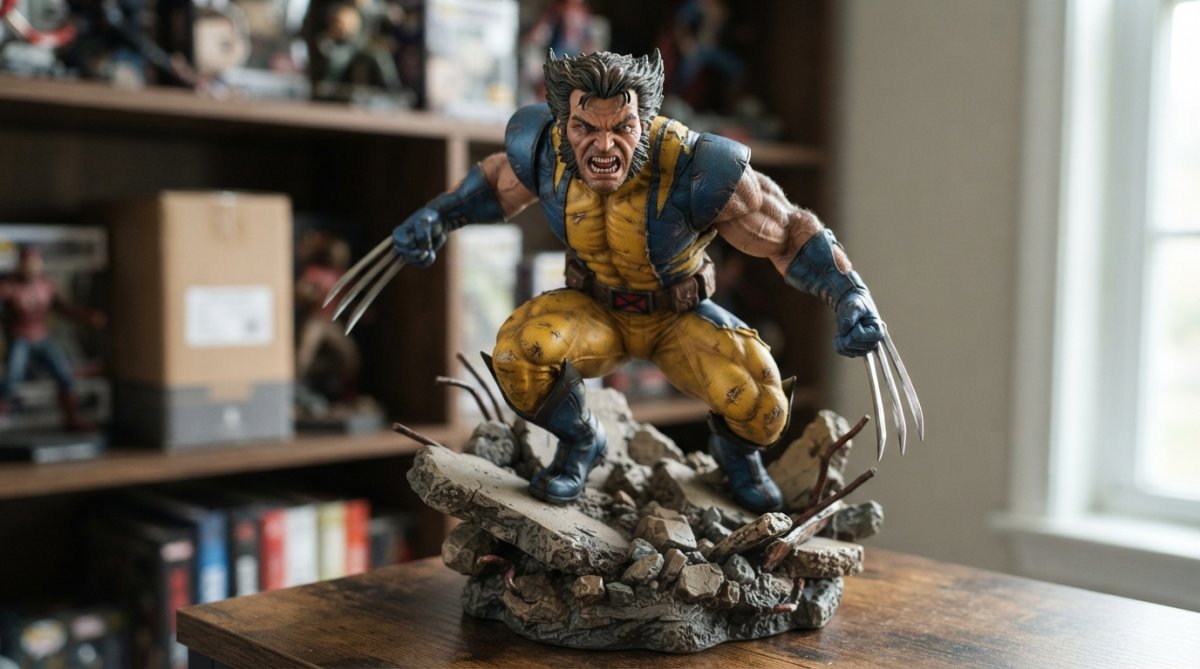
Unmasked vs. Masked Variants
Masked variants emphasize the pointed cowl and battle-ready silhouette. Unmasked variants show Logan's face, letting the sculptor work with expression and stubble detail. Neither is objectively better: single-statue displays often favor unmasked for personality, while masked versions pair better with team lineups.
How to Clean Resin Statues Without Damaging the Finish
Cleaning resin statues safely comes down to using a soft brush, lukewarm water with a drop of mild dish soap, and a microfiber cloth. Skip abrasives and alcohol-based cleaners, which dull hand-painted surfaces.
Wolverine - Highly Detailed Statue →
- Dust weekly with a soft brush
- Wipe monthly with a barely damp microfiber cloth
- Keep out of direct sunlight to slow paint fading
- Store the original box and foam for moves
Where to Buy High-Quality Marvel Statues You Can Trust
Buying high-quality Marvel statues starts with three checks: licensing or artist credit, return policy, and packaging standards. A trustworthy seller names the sculptor, shows real photos, and stands behind the product if it arrives damaged.
Price Points, Limited Editions, and Investment Potential
Price for a Wolverine statue ranges widely by scale, edition size, and licensing status, and the biggest driver of long-term value is not the character, it is the edition. A numbered run of a few hundred pieces behaves very differently on the secondary market than an open edition a seller can restock indefinitely.
What Actually Drives Value
Four factors do most of the work:
- Edition size and numbering. A piece marked "12 of 300" carries a known scarcity. An open edition carries none, no matter how good the sculpt is. When a run sells out at retail, the only way to acquire it becomes the secondary market, and that is where prices move.
- Licensing and artist credit. Officially licensed pieces and pieces with a named sculptor hold value better than anonymous casts of uncertain origin. A named sculptor gives buyers something to research and compare.
- Condition. Original paint, no repairs, no chips, and no sun fading. A statue displayed in direct sunlight for years will fade, and faded paint cuts resale value sharply, often by more than half.
- Completeness. Original box, foam inserts, art card, and any certificate or numbered base plate. Collectors pay a premium for a complete package because it is the only reliable way to ship and to prove the piece is what it claims to be.
A Collector's Guide to Reading the Market
Statue values tend to move in a slow, lumpy pattern rather than a smooth curve: a piece holds near retail while available, dips slightly once the run sells out and hype fades, then climbs over several years if the character stays culturally relevant and the edition was genuinely small.
The signals worth watching are simple:
- Sold-out status at retail. Once a piece is gone from the primary seller, the secondary market sets the price.
- Completed sales, not asking prices. An asking price of $400 means nothing if completed sales are landing at $180. Look at what actually sold.
- Edition size relative to demand. A run of 300 for a popular character is tighter than a run of 3,000. Smaller runs with strong demand are where appreciation tends to show up.
- Line cohesion. Pieces that complete a team or a themed display often hold value better than standalone pieces, because buyers are filling a gap rather than making a discretionary purchase.
The Honest Framing
Investment potential is real but modest for most pieces. Statues are not a liquid asset: selling takes time, shipping is expensive and risky, and marketplace fees eat into any gain. Treat appreciation as a bonus, not a plan.
Display Lighting, Maintenance, and Preservation Tips
Display lighting should flatter the sculpt without cooking it. LED spotlights with a warm-to-neutral color temperature (around 3000K to 4000K) bring out hand-painted shading without the heat of older halogen bulbs, which can soften resin and accelerate paint fading.
Conclusion: Picking the Right Wolverine Statue for Your Collection
Choosing a Wolverine statue for collectors comes down to matching scale, pose, and budget to how you actually display your collection, not chasing the biggest piece on the market. A well-sculpted 1:10 statue on a lit shelf often reads better than a quarter scale piece crammed into a dark corner.
Frequently Asked Questions
What are the different scales available for Wolverine statues?
Common scales include 1:10, 1:6, 1:4 (quarter scale), and 1:3. A 1:10 statue typically stands 6-8 inches tall, 1:6 around 12 inches, and 1:4 quarter scale can reach 18-24 inches. Larger scales allow more sculpted detail, such as musculature and costume texture, but cost more and need dedicated shelf space. Choose based on your display area and budget.
How do I clean a resin statue without damaging the paint?
Use a soft brush to remove dust weekly. For deeper cleaning, mix a drop of mild dish soap in lukewarm water, dip a microfiber cloth, wring it out, and wipe gently. Never soak the statue or use alcohol or abrasive cleaners, which can strip paint. Dry immediately with a clean cloth and keep the statue out of direct sunlight to prevent fading.
Are limited edition Wolverine statues a good investment?
Limited edition statues from well-regarded sculptors can hold or increase value, especially if the edition size is small and the character is popular. However, returns are not guaranteed. Buy what you enjoy displaying first. Keep the original box and art card, as complete packaging often increases resale value. Treat investment potential as a bonus, not the main reason to buy.
Where can I find high-quality Marvel statues that are officially licensed?
Look for retailers that source commercial licensing from sculptors and provide a guarantee. Noble Nerds offers fan-inspired statues like the Wolverine Highly Detailed Statue, sculpted by H3llcreator, with a one-year guarantee and free shipping on orders over $80 within the USA. Always check the product listing for licensing details and return policy before buying.